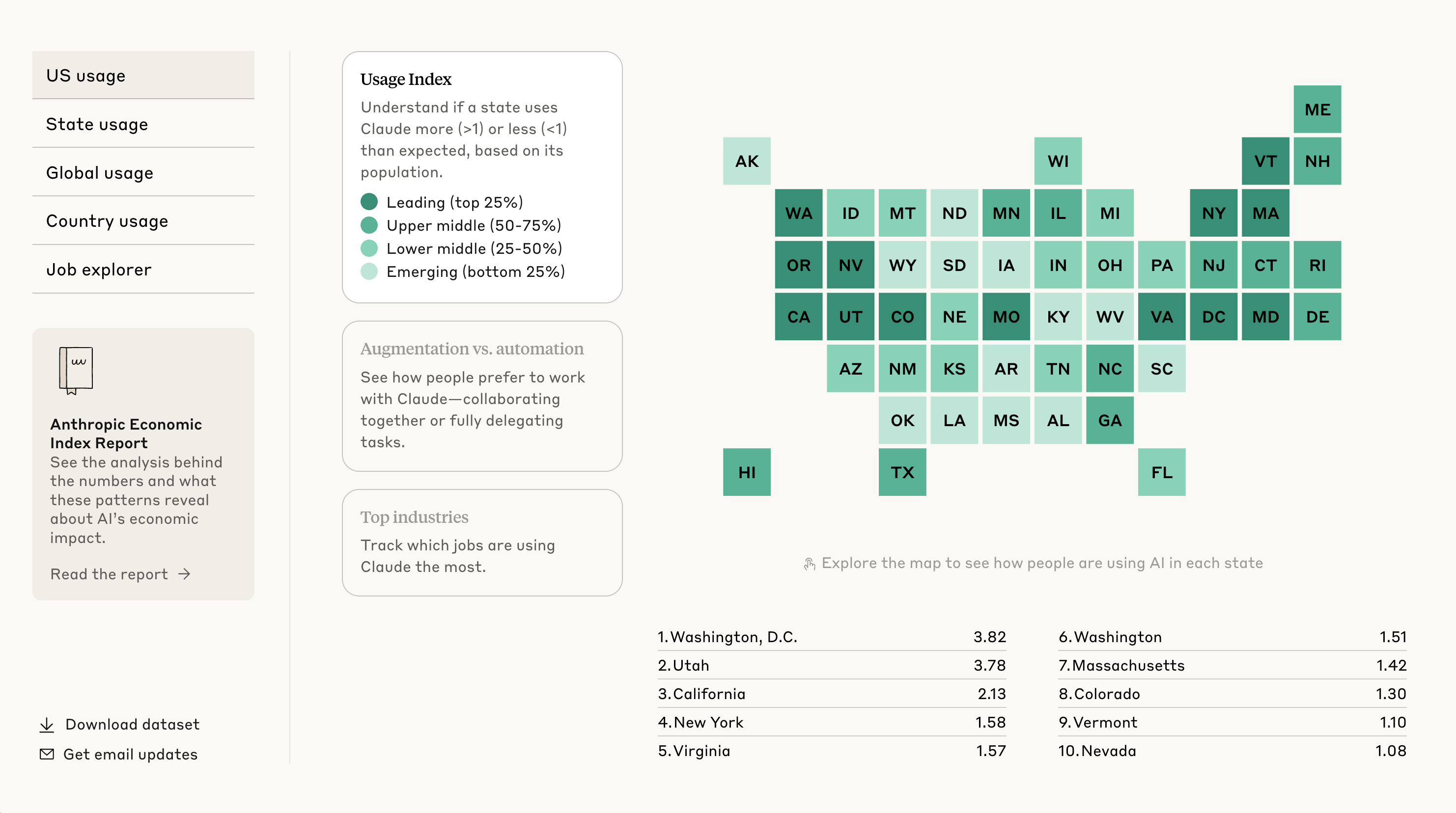
The Anthropic Economic Index is a comprehensive measure designed to analyze the multifaceted effects of artificial intelligence (AI) on the global economy. As AI technology rapidly advances, understanding its economic implications becomes crucial for policymakers, businesses, and workers alike.
AI has the potential to significantly boost productivity and innovation across various sectors. From manufacturing to healthcare, AI-driven automation and data analysis are transforming traditional industries, leading to increased efficiency and new business opportunities. The index evaluates these impacts by tracking key economic indicators, such as GDP growth, employment rates, and industry output, in relation to AI adoption levels.
One of the primary concerns surrounding AI's integration into the economy is its effect on employment. While AI can displace certain jobs, especially those involving routine tasks, it also creates new roles in emerging fields like AI development, data science, and robotics maintenance. The index examines these shifts, providing insights into how labor markets are adapting and what policies might be necessary to ensure a smooth transition for workers.
Furthermore, the index considers the disparities in AI's economic benefits across different regions and income groups. Developed nations tend to have more resources to invest in AI infrastructure and research, potentially widening economic gaps if developing countries do not keep pace. Addressing these disparities is essential for fostering inclusive growth and avoiding increased inequality.
In addition to macroeconomic factors, the index evaluates industry-specific impacts. For example, in finance, AI algorithms enhance trading strategies and risk management; in retail, personalized shopping experiences are driven by machine learning. These technological advancements contribute to competitive advantages but also pose regulatory and ethical challenges that need to be managed carefully.
The Anthropic Economic Index aims to serve as a vital tool for understanding the complex relationship between AI and economic development. By providing data-driven insights, it helps stakeholders make informed decisions about investment, regulation, and workforce development. As AI continues to evolve, ongoing analysis will be essential to maximize benefits while mitigating risks associated with this transformative technology.